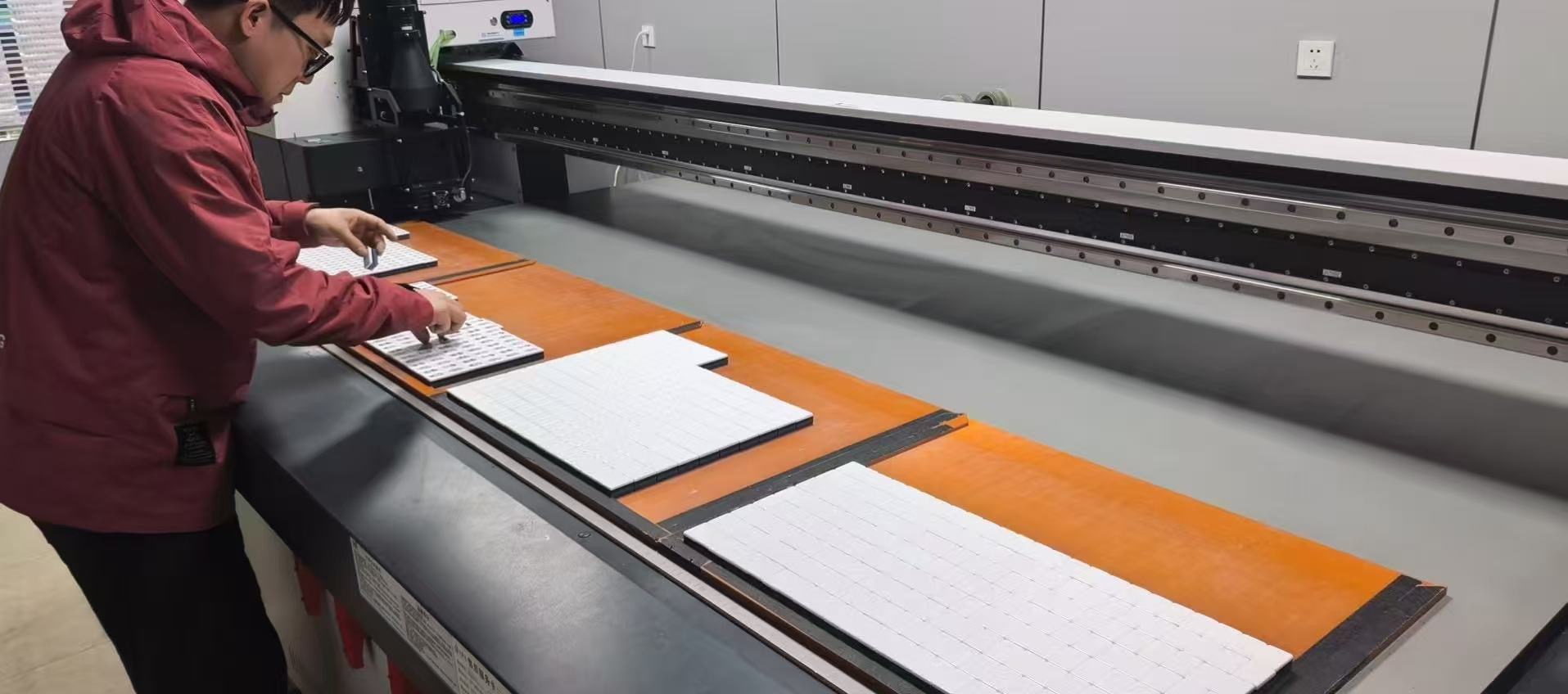
Direct answer: There is no reliable single price for a custom Mahjong set before the specification is defined. Unit cost is shaped by the tile count, dimensions, material and layers, printing or engraving, artwork complexity, quantity, accessories, packaging, sampling, QC, testing, and delivery terms. At Henry Mahjong, fully custom production starts at 200 sets. Lower-volume custom requests can be reviewed, but the unit cost is usually higher.
A quote based only on a logo is normally a preliminary estimate. A decision-ready quote needs enough information to identify what will be made, approved, packed, inspected, and delivered.
Use a complete cost formula
Buyers often compare only the factory unit price. A better project budget separates five cost groups:
| Cost group | What it can include |
|---|---|
| Product manufacturing | Tiles, printing or engraving, finishing, racks, pushers, mats, dice, bags, and other components |
| Development and sample | Artwork review, mockup, sample construction, process setup, revisions, and sample delivery |
| Retail packaging | Trays, bags, cases, rigid boxes, sleeves, inserts, labels, barcodes supplied by the buyer, and carton marks |
| Quality and documentation | Agreed inspections, production evidence, testing when applicable, and order-specific documentation |
| Logistics | Export cartons, freight, insurance where arranged, destination charges, duties, and taxes according to the agreed quote basis |
Project budget = product + development + packaging + quality/documentation + logistics.
Not every supplier includes the same items. Compare quotations only after confirming the product specification, package contents, sample scope, inspection scope, delivery point, and commercial terms.
1. Order quantity and repeat-order plan
Quantity affects how setup work, material preparation, printing or engraving setup, packaging development, and production handling are spread across the order. Fully custom Henry Mahjong projects start from 200 sets. Smaller custom quantities may be reviewed when the buyer accepts a higher unit cost.
Tell the supplier whether the order is:
- a development sample;
- a small market test;
- a first production run;
- a wholesale or distributor order; or
- the first order in a repeat program.
A repeat-order plan can justify a more controlled master specification, packaging structure, and color reference because those records reduce uncertainty in later runs.
2. Tile count and exact manifest
A quote for “one Mahjong set” is incomplete. State whether the product contains 160 tiles, 166 tiles, or another buyer-defined count, then list every category and copy quantity.
The difference between 160 and 166 tiles is not only six pieces. It can change tray capacity, case dimensions, weight, counting time, and the number of artwork files. Read the 160 vs. 166-tile buyer guide and send a line-by-line tile manifest with the RFQ.
3. Tile dimensions and finished weight
Height, width, thickness, and density affect material use, handling, tray dimensions, case size, export-carton weight, and freight. A thicker layered tile can create a very different landed cost from a thinner single-layer tile, even when both sets contain the same number of pieces.
Specify:
- finished tile height, width, and thickness;
- acceptable dimensional tolerance if required;
- single-layer or layered construction;
- surface and edge finish;
- target feel or weight direction; and
- the racks, trays, or cases the tiles must fit.
Do not approve retail packaging until the final tile dimensions and complete set weight are known.
4. Material and layer construction
Material choice influences appearance, weight, machining or printing behavior, bonding, color options, and production control. Henry Mahjong reviews acrylic, layered construction, melamine-style options, transparent effects, and custom color directions by project.
A one-layer body, a two-layer tile, and a four-layer visual construction do not share the same process or cost structure. Ask the supplier to identify:
- the material of each visible layer;
- the total finished thickness;
- the color of each layer;
- how layers are bonded or assembled;
- which surfaces receive artwork; and
- which sample will become the production reference.
Use the 3D tile designer to organize a construction direction before asking for a firm quote.
5. Printing, engraving, and finishing process
UV color printing and laser engraving solve different design requirements. UV printing supports multicolor graphics and broad coverage. Laser engraving creates recessed detail and a tactile result. Some projects combine both.
Cost and feasibility can change with:
- the number of printed surfaces;
- full-color versus limited-color artwork;
- engraving area and depth;
- fine lines or small text;
- front and back alignment;
- repeated back patterns;
- surface preparation; and
- additional finishing or handwork.
Select a process because it supports the product, not because one technique sounds more premium. Ask for a sample that represents the intended production method.
6. Artwork complexity and color control
A logo-only layout is different from a complete original tile system with suit symbols, jokers, flowers, backs, packaging, inserts, and coordinated accessories. More unique files create more review points and more opportunities for mismatched revisions.
To reduce avoidable work:
- provide editable vector files when possible;
- use clear file names and revision numbers;
- supply color references;
- mark print, engraving, and no-print areas;
- separate tile, mat, and packaging files; and
- confirm that all artwork is original or authorized.
If design support is needed, explain whether the supplier should create a basic logo layout, an original visual direction, or production-ready artwork for the full set.
7. Accessories and bundle contents
Racks, pushers, dice, wind indicators, score accessories, tile trays, bags, cases, mats, mat tubes, instructions, and replacement pieces can materially change the unit price and freight profile.
Create one approved bill of materials for the complete bundle. For every accessory, define:
- quantity per set;
- dimensions and material;
- color and branding;
- individual packaging;
- position inside the retail package; and
- replacement or spare policy.
An accessory that is missing from the quotation may appear later as an unexpected cost. An accessory that is included but not valued by the customer adds weight and complexity without improving the product.
8. Retail packaging and private label requirements
Packaging is both a selling tool and a protective system for a heavy tile product. A rigid box, soft bag, hard case, sleeve, tray, insert, instruction card, label set, and export carton each require separate decisions.
Packaging cost is affected by:
- box or case structure;
- material and finish;
- printed area and number of colors;
- internal tray or divider;
- protective wrapping;
- inserts and instructions;
- barcode and retail labels;
- quantity per export carton; and
- drop, compression, or other buyer-specified testing when applicable.
A visually attractive package that cannot support the product weight is not a finished specification. Review private-label and packaging support together with the tile design.
9. Sampling, testing, and QC scope
Sample cost depends on the product, customization level, artwork, processes, accessories, packaging, and delivery method. The sample should be tied to written review criteria so the buyer knows what is being approved.
Project-specific cost can also include:
- material or finished-product testing when applicable;
- age-grading and destination-market review;
- third-party inspection;
- production photo or video checkpoints;
- set-completeness checks;
- packaging and carton-mark review; and
- corrective follow-up against agreed requirements.
Testing and documentation should be matched to the final product, responsible entity, material, destination, and intended user. A report for one material or SKU should not be treated as a universal certificate. Review the factory QC process and compliance document pathways before requesting a blanket requirement.
10. Delivery country, postal code, and quote basis
A product-only factory price is not the same as a delivered price. Freight depends on the packed dimensions, gross weight, carton count, destination, transport method, delivery speed, and current carrier conditions.
For a useful logistics estimate, send:
- delivery country;
- U.S. state and ZIP code when applicable;
- commercial or residential destination;
- requested delivery date;
- sea, air, express, or buyer-arranged freight preference;
- whether the quote should stop at the factory, port, or delivery address; and
- any importer, customs, insurance, duty, or tax assumptions that must be stated separately.
Do not compare two supplier prices unless they use the same delivery point, package contents, freight method, and included charges.
How to lower cost without weakening the product
Cost control works best when it removes uncertainty and unnecessary variation rather than removing essential quality.
- Use one approved tile body across a coordinated product range when suitable.
- Separate must-have features from optional upgrades before sampling.
- Limit unique accessory materials and colors unless they support the retail story.
- Provide clean production artwork and one controlled revision.
- Design the package around the actual tile weight and dimensions.
- Avoid an oversized case that increases dimensional freight without adding protection.
- Compare quotations on the same specification and commercial basis.
- Use a ready-stock order to test demand before committing to full custom production when the brand concept is not yet proven.
- Record the approved sample, manifest, bill of materials, and QC checkpoints for repeat orders.
Henry Mahjong supports ready-stock sets from one set and fully custom production from 200 sets, allowing buyers to choose a route that matches the launch stage.
Copy this custom Mahjong RFQ template
Product: Custom American Mahjong set
Intended market / customer:
Order quantity:
Tile count: 160 / 166 / other
Exact tile manifest:
Tile dimensions:
Material and layer construction:
Front artwork status:
Back artwork status:
Printing / engraving requirements:
Accessories per set:
Mahjong mat requirements:
Retail packaging:
Labels / barcode / inserts:
Sample requirements:
QC and inspection requirements:
Compliance or testing requirements:
Delivery country:
ZIP / postal code:
Target delivery date:
Shipping preference:
Target unit price or project budget, if available:
Files attached:
Other requirements:
Sending this information does not lock the project. It gives the supplier enough detail to identify feasibility questions and separate required costs from optional upgrades.
Frequently asked questions
Can a supplier quote a custom Mahjong set from only a logo?
A preliminary estimate may be possible, but a reliable quote also needs quantity, tile count, dimensions, material, process, accessories, packaging, destination, and timing.
What is the MOQ for fully custom Mahjong sets?
Henry Mahjong fully custom production starts at 200 sets. Smaller custom projects can be reviewed, but the unit cost is generally higher.
Does a 166-tile set always cost more than a 160-tile set?
Not necessarily. Six additional tiles add material and pack-out, but construction, dimensions, artwork process, case, accessories, order quantity, and freight may have a larger effect on the final price.
Is the physical sample included in the unit price?
Sample scope and cost are confirmed by project. Ask whether the sample, revisions, sample freight, and any packaging prototype are included or quoted separately.
Can the quotation include delivery to the United States?
A destination-based estimate can be prepared after the packed specification, quantity, delivery ZIP code, timing, and preferred shipping method are known. Confirm which destination charges, duties, and taxes are included or excluded.
Why can two suppliers quote very different prices for the same idea?
They may be quoting different tile bodies, dimensions, artwork processes, accessories, packaging, QC scopes, freight terms, or assumptions. Normalize the specification before comparing the numbers.
Build a quote that can survive sampling.
Send the tile specification, artwork status, quantity, packaging, destination, and approval requirements so the project can be reviewed on one clear basis.